
Contents
- 🏯 Introduction to Ancient Rome
- 📆 The Roman Kingdom: A City's Humble Beginnings
- 🏛️ The Roman Republic: Expansion and Governance
- 👑 The Roman Empire: Rise to Power and Glory
- 💪 The Roman Legions: Military Might and Conquest
- 🏗️ Roman Architecture and Engineering: Lasting Legacies
- 📚 Roman Culture and Society: A Complex Tapestry
- 💸 Roman Economy and Trade: The Pulse of the Empire
- 🤝 Roman Politics and Governance: A Delicate Balance
- 🌪️ The Fall of the Western Roman Empire: A Complex Collapse
- 🔥 Legacy of Ancient Rome: Enduring Impact on Modern Society
- Frequently Asked Questions
- Related Topics
Overview
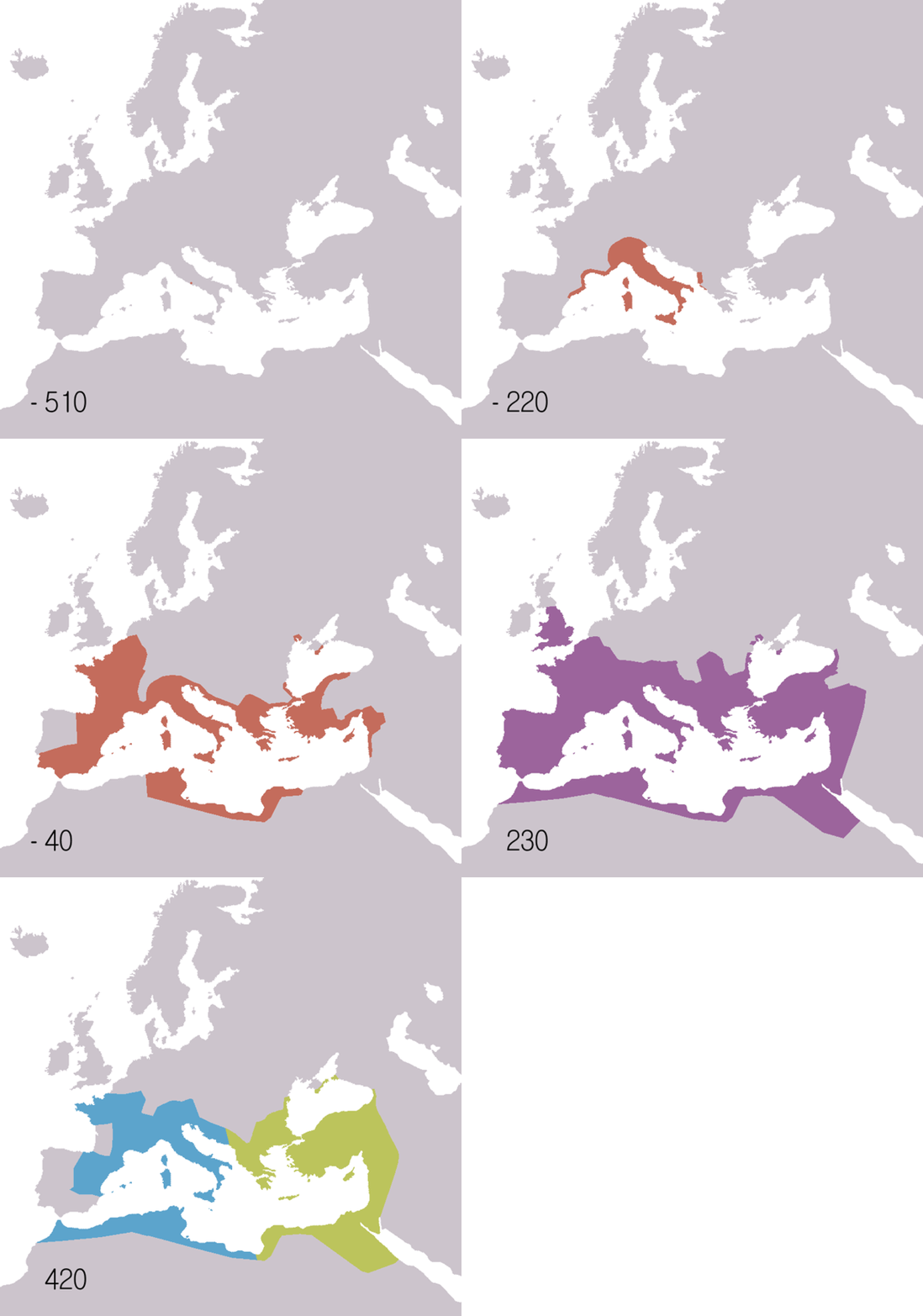
Ancient Rome, spanning over 12 centuries, was a civilization that grew from a small city-state in central Italy to a vast empire that left an indelible mark on law, architecture, governance, and culture. Founded in 753 BCE, Rome's evolution was marked by its transformation from a republic to an empire under the leadership of Augustus Caesar in 27 BCE. The Roman Empire's vast territories, which at its peak covered much of Europe, North Africa, and parts of Asia, were governed through a complex system of laws, roads, and administrative divisions. Despite its grandeur, Rome faced numerous challenges, including internal strife, external pressures, and economic strain, which ultimately led to its decline and fall in 476 CE. The legacy of Ancient Rome, however, continues to influence modern society, with its contributions to language, politics, and architecture remaining unparalleled. As we look to the future, understanding Ancient Rome's ascent and descent offers valuable lessons in governance, sustainability, and the cyclical nature of civilizations.
🏯 Introduction to Ancient Rome
Ancient Rome, a civilisation that spanned over 12 centuries, is a fascinating topic that has captivated historians and enthusiasts alike. From its humble beginnings as a small Italian city to its rise as a powerful empire, ancient Rome's history is a complex and intriguing narrative. The Roman Kingdom, which lasted from 753 to 509 BC, laid the foundation for the city's future growth and expansion. The Roman Republic, which followed, saw the city's transformation into a powerful republic, with a system of governance that would influence modern democracies. As the Roman Empire expanded, it absorbed various cultures, incorporating their practices and traditions into its own unique identity, as seen in the Roman culture and Roman society.
📆 The Roman Kingdom: A City's Humble Beginnings
The Roman Kingdom, which was founded in 753 BC, was the first period of ancient Rome's history. During this time, the city was ruled by a series of kings, with the last king, Lucius Tarquinius Superbus, being overthrown in 509 BC. This marked the beginning of the Roman Republic, which would go on to shape the city's governance and expansion. The Roman Republic was characterised by a system of governance that included the Roman Senate and the Roman Assembly, which would later influence the development of modern democracies. The Roman conquest of Italy during this period also laid the foundation for the city's future expansion. As the Roman Republic expanded, it encountered various cultures, including the Etruscan civilization, which would later influence Roman art and architecture.
🏛️ The Roman Republic: Expansion and Governance
The Roman Republic, which lasted from 509 to 27 BC, was a period of significant expansion and growth for the city. During this time, Rome expanded its territories through a series of conquests, including the Roman conquest of Italy and the Roman conquest of Gaul. The Roman Republic was also characterised by a system of governance that included the Roman Senate and the Roman Assembly. The Roman legions, which were the backbone of the Roman army, played a crucial role in the city's expansion and conquests. As the Roman Republic expanded, it encountered various cultures, including the Greek culture, which would later influence Roman art, architecture, and philosophy. The Roman Republic government was also influenced by the Roman law, which would later shape the development of modern legal systems.
👑 The Roman Empire: Rise to Power and Glory
The Roman Empire, which lasted from 27 BC to 476 AD, was the final period of ancient Rome's history. During this time, the city reached the height of its power and glory, with a vast empire that spanned across three continents. The Roman Empire was characterised by a system of governance that included the Roman Emperor and the Roman Senate. The Roman legions continued to play a crucial role in the city's expansion and conquests, with the Roman conquest of Britain being a notable example. As the Roman Empire expanded, it encountered various cultures, including the Egyptian culture, which would later influence Roman art and architecture. The Roman Empire economy was also influenced by the Roman trade, which would later shape the development of modern economic systems.
💪 The Roman Legions: Military Might and Conquest
The Roman legions, which were the backbone of the Roman army, played a crucial role in the city's expansion and conquests. The legions were known for their discipline, organisation, and military tactics, which allowed them to conquer a vast territory. The Roman legionary was a well-trained and well-equipped soldier, with a distinctive Roman helmet and Roman sword. The legions were also supported by a network of Roman roads, which facilitated the movement of troops and supplies. As the Roman legions expanded, they encountered various cultures, including the Celtic culture, which would later influence Roman art and architecture. The Roman legion tactics were also influenced by the Roman military strategy, which would later shape the development of modern military tactics.
🏗️ Roman Architecture and Engineering: Lasting Legacies
Roman architecture and engineering were renowned for their grandeur and innovation. The Roman Colosseum, which was built in the 1st century AD, is one of the most iconic examples of Roman architecture. The Roman Pantheon, which was built in the 2nd century AD, is another notable example of Roman engineering. The Romans also developed a sophisticated system of Roman aqueducts, which brought fresh water to the city. As the Roman Empire expanded, it encountered various cultures, including the Persian culture, which would later influence Roman art and architecture. The Roman architecture styles were also influenced by the Roman engineering techniques, which would later shape the development of modern architecture and engineering.
📚 Roman Culture and Society: A Complex Tapestry
Roman culture and society were complex and multifaceted. The Romans were known for their love of Roman theater, with plays and performances being a popular form of entertainment. The Roman gladiatorial games were also a popular spectacle, with gladiators fighting in the Roman Colosseum. The Romans also had a rich tradition of Roman literature, with authors such as Virgil and Ovid making significant contributions. As the Roman Empire expanded, it encountered various cultures, including the Jewish culture, which would later influence Roman art and architecture. The Roman culture influence can be seen in the many Roman art and Roman architecture that still exist today.
💸 Roman Economy and Trade: The Pulse of the Empire
The Roman economy and trade were the pulse of the empire. The Romans were skilled traders, with a vast network of Roman trade routes that spanned across the empire. The Roman currency, which included the Roman denarius and the Roman aureus, was widely used throughout the empire. The Romans also developed a sophisticated system of Roman banking, with banks and financial institutions playing a crucial role in the economy. As the Roman Empire expanded, it encountered various cultures, including the Chinese culture, which would later influence Roman art and architecture. The Roman economy influence can be seen in the many Roman coins that still exist today.
🤝 Roman Politics and Governance: A Delicate Balance
Roman politics and governance were a delicate balance of power and influence. The Roman Emperor was the supreme ruler of the empire, with the Roman Senate and the Roman Assembly playing important roles in governance. The Roman law was also an important aspect of Roman governance, with the Roman Twelve Tables being a notable example. As the Roman Empire expanded, it encountered various cultures, including the Germanic culture, which would later influence Roman art and architecture. The Roman governance influence can be seen in the many Roman laws that still exist today.
🌪️ The Fall of the Western Roman Empire: A Complex Collapse
The fall of the Western Roman Empire was a complex and multifaceted process. The empire was weakened by a series of Roman civil wars, as well as external pressures from barbarian tribes such as the Visigoths and the Vandals. The Roman economy decline also played a significant role in the empire's collapse. As the Western Roman Empire fell, the Eastern Roman Empire, also known as the Byzantine Empire, continued to thrive, with its capital in Constantinople. The Roman legacy can be seen in the many Roman ruins that still exist today.
🔥 Legacy of Ancient Rome: Enduring Impact on Modern Society
The legacy of ancient Rome is still felt today, with its influence visible in many aspects of modern society. The Roman law has shaped the development of modern legal systems, while the Roman governance has influenced the development of modern democracies. The Roman architecture and Roman engineering have also had a lasting impact, with many modern buildings and structures inspired by Roman designs. As we look to the future, it is clear that the legacy of ancient Rome will continue to shape and inspire us, with its influence visible in many aspects of modern society, including modern politics, modern economy, and modern culture.
Key Facts
- Year
- 753
- Origin
- Central Italy
- Category
- History
- Type
- Historical Civilization
Frequently Asked Questions
What was the Roman Kingdom?
The Roman Kingdom was the first period of ancient Rome's history, lasting from 753 to 509 BC. During this time, the city was ruled by a series of kings, with the last king being Lucius Tarquinius Superbus. The Roman Kingdom laid the foundation for the city's future growth and expansion, with the Roman conquest of Italy being a notable example. The Roman Kingdom was also influenced by the Etruscan civilization, which would later shape Roman art and architecture.
What was the Roman Republic?
The Roman Republic was the second period of ancient Rome's history, lasting from 509 to 27 BC. During this time, the city was governed by a system that included the Roman Senate and the Roman Assembly. The Roman Republic was characterised by a series of conquests, including the Roman conquest of Italy and the Roman conquest of Gaul. The Roman Republic was also influenced by the Greek culture, which would later shape Roman art, architecture, and philosophy.
What was the Roman Empire?
The Roman Empire was the final period of ancient Rome's history, lasting from 27 BC to 476 AD. During this time, the city reached the height of its power and glory, with a vast empire that spanned across three continents. The Roman Empire was characterised by a system of governance that included the Roman Emperor and the Roman Senate. The Roman Empire was also influenced by the Egyptian culture, which would later shape Roman art and architecture.
What were the Roman legions?
The Roman legions were the backbone of the Roman army, playing a crucial role in the city's expansion and conquests. The legions were known for their discipline, organisation, and military tactics, which allowed them to conquer a vast territory. The Roman legionary was a well-trained and well-equipped soldier, with a distinctive Roman helmet and Roman sword. The legions were also supported by a network of Roman roads, which facilitated the movement of troops and supplies.
What was the Roman economy like?
The Roman economy was a complex and sophisticated system, with a vast network of Roman trade routes that spanned across the empire. The Roman currency, which included the Roman denarius and the Roman aureus, was widely used throughout the empire. The Romans also developed a sophisticated system of Roman banking, with banks and financial institutions playing a crucial role in the economy.
What was the legacy of ancient Rome?
The legacy of ancient Rome is still felt today, with its influence visible in many aspects of modern society. The Roman law has shaped the development of modern legal systems, while the Roman governance has influenced the development of modern democracies. The Roman architecture and Roman engineering have also had a lasting impact, with many modern buildings and structures inspired by Roman designs.
How did the Roman Empire fall?
The fall of the Western Roman Empire was a complex and multifaceted process, with the empire being weakened by a series of Roman civil wars and external pressures from barbarian tribes such as the Visigoths and the Vandals. The Roman economy decline also played a significant role in the empire's collapse. As the Western Roman Empire fell, the Eastern Roman Empire, also known as the Byzantine Empire, continued to thrive, with its capital in Constantinople.