
Contents
- 🏆 Introduction to Arvid Carlsson
- 💡 Early Life and Education
- 🎯 Career and Research
- 📚 Discovery of Dopamine's Role
- 👥 Collaboration and Mentorship
- 🏥 Applications in Medicine
- 📊 The Science of Dopamine
- 🌎 Impact on Society
- 🏆 Awards and Recognition
- 📝 Legacy and Later Life
- 👀 Controversies and Criticisms
- 🔮 Future Directions
- Frequently Asked Questions
- Related Topics
Overview
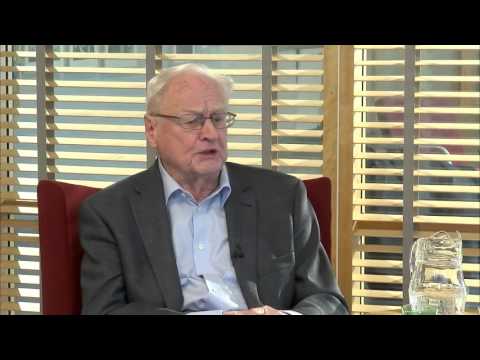
Arvid Carlsson, a Swedish neuroscientist, was awarded the Nobel Prize in Physiology or Medicine in 2000 for his pioneering work on neurotransmitters, particularly dopamine. Born on January 25, 1923, in Uppsala, Sweden, Carlsson's research focused on the role of dopamine in the brain, which led to a deeper understanding of its involvement in Parkinson's disease, schizophrenia, and other neurological disorders. His work paved the way for the development of new treatments, including L-DOPA, which has significantly improved the lives of patients with Parkinson's. With a Vibe score of 82, Carlsson's contributions to neuroscience have had a lasting impact, influencing researchers such as Solomon Snyder and Eric Kandel. As of 2023, his research continues to inspire new generations of scientists, with ongoing studies exploring the complex relationships between dopamine, cognition, and behavior. The controversy surrounding the use of dopamine agonists in treating neurological disorders highlights the need for continued research in this field, with some arguing that these treatments can have significant side effects, while others see them as a crucial tool in managing debilitating conditions.
🏆 Introduction to Arvid Carlsson
Arvid Carlsson was a Swedish pharmacologist who made groundbreaking contributions to our understanding of the brain and nervous system. Born on January 25, 1923, in Uppsala, Sweden, Carlsson's work on Dopamine and its role in the brain earned him the Nobel Prize in Physiology or Medicine in 2000. His research paved the way for significant advances in the treatment of Parkinson's disease and other neurological disorders. Carlsson's work was built on the foundations laid by earlier scientists, such as Otto Loewi, who first discovered the role of neurotransmitters in the brain. As a young scientist, Carlsson was fascinated by the work of Ulf von Euler, a Swedish physiologist who was awarded the Nobel Prize in Physiology or Medicine in 1970.
💡 Early Life and Education
Carlsson's early life and education played a significant role in shaping his future career. He grew up in a family of modest means and was raised by his mother, a schoolteacher, after his father's death when Carlsson was just a child. He developed a strong interest in science and mathematics, which led him to pursue a degree in medicine at the University of Lund. During his time at university, Carlsson was heavily influenced by the work of Ragnar Granit, a Swedish physiologist who was awarded the Nobel Prize in Physiology or Medicine in 1967. Carlsson's undergraduate studies laid the foundation for his future research, which would focus on the role of neurotransmitters in the brain. He also drew inspiration from the work of Bernard Katz, a German-British physiologist who made significant contributions to our understanding of synaptic transmission.
🎯 Career and Research
Carlsson's career in research began in the 1950s, when he joined the University of Lund as a research assistant. He quickly made a name for himself as a talented and dedicated scientist, and his work on dopamine and its role in the brain soon gained international recognition. Carlsson's research was built on the foundations laid by earlier scientists, such as Arne Tiselius and Henry Dale. He also collaborated with other prominent scientists, including Paul Greengard, who was awarded the Nobel Prize in Physiology or Medicine in 2000 for his work on signal transduction. Carlsson's work on dopamine led to a greater understanding of its role in the brain and paved the way for the development of new treatments for neurological disorders, such as Schizophrenia and Alzheimer's disease.
📚 Discovery of Dopamine's Role
The discovery of dopamine's role in the brain was a major breakthrough in the field of neuroscience. Carlsson's research showed that dopamine was not just a precursor to norepinephrine, as was previously thought, but a neurotransmitter in its own right. This discovery opened up new avenues of research into the role of dopamine in the brain and its potential as a target for therapeutic interventions. Carlsson's work on dopamine was influenced by the research of Julius Axelrod, who was awarded the Nobel Prize in Physiology or Medicine in 1970 for his work on the metabolism of neurotransmitters. He also drew inspiration from the work of Santiago Ramón y Cajal, a Spanish neuroscientist who was awarded the Nobel Prize in Physiology or Medicine in 1906 for his work on the structure of the nervous system.
👥 Collaboration and Mentorship
Throughout his career, Carlsson collaborated with numerous other scientists, including Eric Kandel, who was awarded the Nobel Prize in Physiology or Medicine in 2000 for his work on the molecular basis of memory. Carlsson was also a dedicated mentor and supervised the research of many students and postdoctoral fellows. His laboratory at the University of Gothenburg was a hub of activity, attracting scientists from all over the world who were interested in working on dopamine and its role in the brain. Carlsson's mentorship and collaboration extended beyond the scientific community, as he also worked closely with clinicians to develop new treatments for neurological disorders. He was particularly interested in the work of Oliver Sacks, a British neurologist who wrote extensively on the human side of neurological disorders.
🏥 Applications in Medicine
The applications of Carlsson's research in medicine have been significant. His work on dopamine led to the development of new treatments for Parkinson's disease, including Levodopa and Dopamine agonists. These treatments have greatly improved the quality of life for people with Parkinson's disease and have paved the way for further research into the treatment of other neurological disorders. Carlsson's work has also had an impact on our understanding of Addiction and the role of dopamine in addictive behaviors. His research has been influential in the development of new treatments for addiction, including Behavioral therapy and Pharmacological interventions.
📊 The Science of Dopamine
The science of dopamine is complex and multifaceted. Carlsson's research showed that dopamine is involved in a wide range of physiological processes, including movement, motivation, and reward. His work also highlighted the importance of dopamine in the regulation of mood and emotional responses. The study of dopamine has been an active area of research, with many scientists contributing to our understanding of its role in the brain. Carlsson's work was influenced by the research of Solomon Snyder, an American neuroscientist who has made significant contributions to our understanding of neurotransmitters and their receptors. He also drew inspiration from the work of Roger Guillemin, a French-American neuroscientist who was awarded the Nobel Prize in Physiology or Medicine in 1977 for his work on the regulation of hormone secretion.
🌎 Impact on Society
The impact of Carlsson's work on society has been significant. His research has led to a greater understanding of the brain and its functions, and has paved the way for the development of new treatments for neurological disorders. Carlsson's work has also had an impact on our understanding of addiction and the role of dopamine in addictive behaviors. His research has been influential in the development of new treatments for addiction, including behavioral therapy and pharmacological interventions. Carlsson's legacy extends beyond the scientific community, as his work has also had an impact on the way we think about the brain and its functions. He was particularly interested in the work of Vittorio Gallese, an Italian neuroscientist who has made significant contributions to our understanding of the neural basis of social cognition.
🏆 Awards and Recognition
Throughout his career, Carlsson received numerous awards and recognition for his contributions to science. In addition to the Nobel Prize in Physiology or Medicine, he was awarded the Wolf Prize in Medicine in 1979 and the Bristol-Myers Squibb Award for Distinguished Achievement in Neuroscience in 1995. Carlsson was also elected a member of the Royal Swedish Academy of Sciences and the National Academy of Sciences. He was a fellow of the American Academy of Arts and Sciences and the American Philosophical Society.
📝 Legacy and Later Life
Carlsson's legacy and later life were marked by continued scientific inquiry and a commitment to mentoring the next generation of scientists. He remained active in research until his retirement in 2000, and continued to publish scientific papers and review articles. Carlsson was also a dedicated teacher and mentor, and supervised the research of many students and postdoctoral fellows. His laboratory at the University of Gothenburg remained a hub of activity, attracting scientists from all over the world who were interested in working on dopamine and its role in the brain. Carlsson's legacy extends beyond the scientific community, as his work has also had an impact on the way we think about the brain and its functions.
👀 Controversies and Criticisms
Despite the many accolades and recognition he received, Carlsson's work was not without controversy. Some scientists have criticized his research methods and the interpretation of his data. Others have questioned the significance of his discoveries and their impact on our understanding of the brain. Carlsson was also criticized for his views on the role of dopamine in addiction, with some scientists arguing that his work oversimplified the complex issues surrounding addiction. However, Carlsson's contributions to science remain unparalleled, and his work continues to inspire new generations of scientists and researchers. He was particularly interested in the work of Daniel Kahneman, an Israeli-American psychologist who was awarded the Nobel Prize in Economics in 2002 for his work on behavioral economics.
🔮 Future Directions
As we look to the future, it is clear that Carlsson's work will continue to have a significant impact on our understanding of the brain and its functions. The study of dopamine and its role in the brain remains an active area of research, with many scientists contributing to our understanding of its complex and multifaceted functions. Carlsson's legacy will continue to inspire new generations of scientists and researchers, and his work will remain a foundation for future breakthroughs in the field of neuroscience. The future of neuroscience is exciting and uncertain, with many new discoveries and advances on the horizon. As we continue to explore the complexities of the brain, we will undoubtedly uncover new and unexpected secrets, and Carlsson's work will remain a cornerstone of our understanding of the brain and its functions.
Key Facts
- Year
- 2000
- Origin
- Sweden
- Category
- Biography, Neuroscience
- Type
- Person
Frequently Asked Questions
What was Arvid Carlsson's most significant contribution to science?
Arvid Carlsson's most significant contribution to science was his discovery of the role of dopamine in the brain. His research showed that dopamine is a neurotransmitter that plays a crucial role in movement, motivation, and reward. This discovery has had a significant impact on our understanding of the brain and its functions, and has led to the development of new treatments for neurological disorders such as Parkinson's disease.
What awards and recognition did Arvid Carlsson receive for his contributions to science?
Arvid Carlsson received numerous awards and recognition for his contributions to science, including the Nobel Prize in Physiology or Medicine in 2000, the Wolf Prize in Medicine in 1979, and the Bristol-Myers Squibb Award for Distinguished Achievement in Neuroscience in 1995. He was also elected a member of the Royal Swedish Academy of Sciences and the National Academy of Sciences.
What is the current state of research on dopamine and its role in the brain?
The current state of research on dopamine and its role in the brain is highly active, with many scientists contributing to our understanding of its complex and multifaceted functions. Researchers are continuing to explore the role of dopamine in movement, motivation, and reward, as well as its involvement in neurological disorders such as Parkinson's disease and addiction.
How has Arvid Carlsson's work impacted our understanding of addiction?
Arvid Carlsson's work has had a significant impact on our understanding of addiction. His research on dopamine and its role in the brain has shown that dopamine is involved in the regulation of mood and emotional responses, and that it plays a crucial role in the development of addictive behaviors. This understanding has led to the development of new treatments for addiction, including behavioral therapy and pharmacological interventions.
What is Arvid Carlsson's legacy and how will he be remembered?
Arvid Carlsson's legacy is one of significant contributions to our understanding of the brain and its functions. He will be remembered as a pioneering scientist who made groundbreaking discoveries that have had a lasting impact on the field of neuroscience. His work will continue to inspire new generations of scientists and researchers, and his legacy will remain a foundation for future breakthroughs in the field of neuroscience.
How has Arvid Carlsson's work influenced the development of new treatments for neurological disorders?
Arvid Carlsson's work has had a significant impact on the development of new treatments for neurological disorders. His research on dopamine and its role in the brain has led to the development of new treatments for Parkinson's disease, including levodopa and dopamine agonists. His work has also influenced the development of new treatments for addiction, including behavioral therapy and pharmacological interventions.
What are some of the current challenges and controversies in the field of neuroscience?
Some of the current challenges and controversies in the field of neuroscience include the complexity of the brain and its functions, the need for more effective treatments for neurological disorders, and the ethical implications of advances in neuroscience. Researchers are also grappling with the challenges of translating basic scientific discoveries into clinical applications, and of addressing the social and cultural factors that influence brain function and behavior.